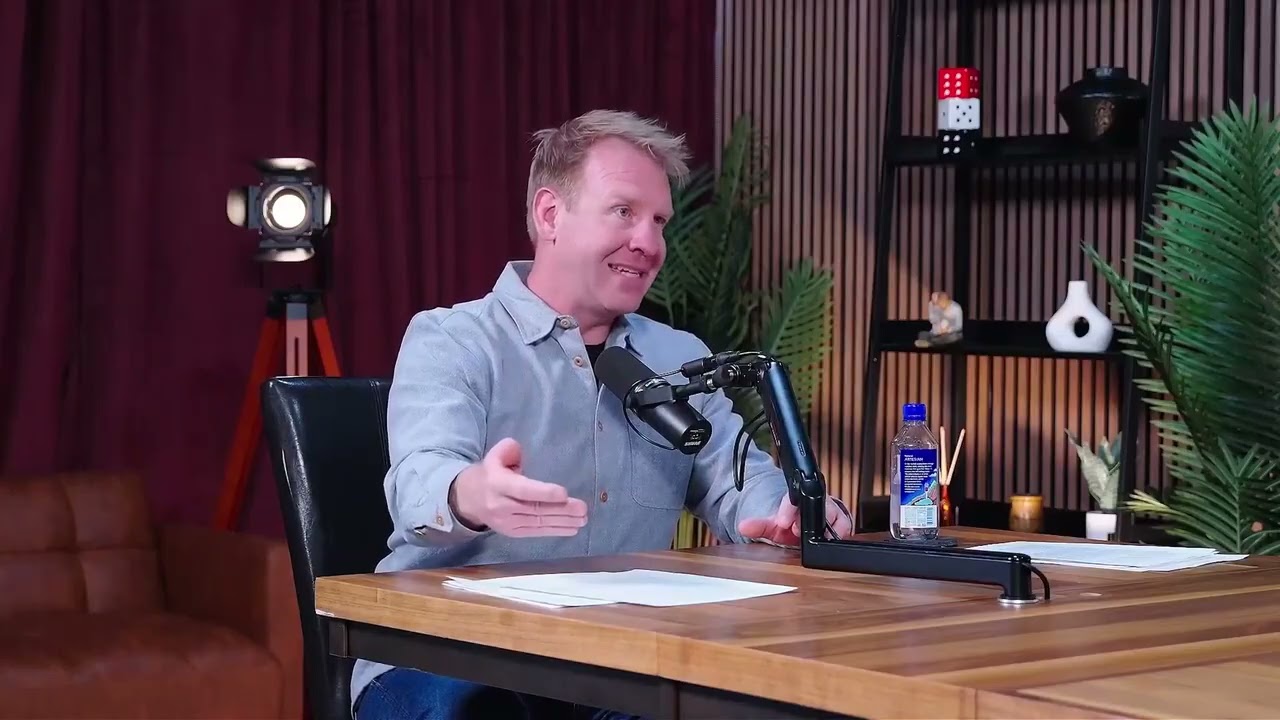
In Episode 5 of Mile High Makers, Majid Boroujerdi asked me about the most expensive patent mistakes I see capable founders make. After about 15 years as a patent lawyer and thousands of applications filed, I see two that keep coming back: founders disclose their technology too early, and they don’t properly allocate who owns it.
Most of this post is about ownership, then about what makes a patent worth owning.
Mistake one: disclosing before you file
The U.S., like most of the world, runs a first-inventor-to-file system. It doesn’t much matter when you first thought of the invention. What sets your priority date is when you file your patent application.
That’s why my advice is to file early and file often. I wouldn’t go as far as saying you can never file too soon. You need enough internal development to describe and enable a meaningful part of what you expect the final invention to be. But I lean toward filing earlier more often than not, and I don’t like relying on the U.S. one-year grace period, which doesn’t apply internationally and doesn’t cover someone else taking your product in their own direction. I walk through the sequencing in First Patent for Startups: File Before You Pitch.
If there’s any uncertainty about whether you’ll want patent protection, file the application first. You can abandon it later. If you don’t file first, you almost always lose the ability to file later.
Mistake two: not allocating ownership of the invention
Bringing a physical product to market usually involves a chain of people. You might work with a designer, then an engineer, then an outsourced manufacturer or contractor who actually builds the product. Each of those stages involves innovation inputs from whoever you’re working with.
The mistake is that founders don’t think about who is contributing to the invention, and they don’t capture those rights in writing.
An example: the broad concept vs. the formula
Here’s the example I gave on the show. Say I have a broad concept for a food product, and I hire you to figure out how to put an ingredient into a mango without making the mango taste terrible. You come up with the formula. You do 90% of the work to actually invent it. In that situation, you may be the actual inventor, and I’m maybe a co-inventor based on the broad concept.
Under 35 U.S.C. § 116, people who contribute to an invention can be joint inventors even when they didn’t work together physically or contribute equally. Inventors start out owning their rights, and under 35 U.S.C. § 261 those rights move to a company through a written assignment. If the person who did 90% of the work never assigned their rights to your company, your company may not own what you think it owns.
I’ve seen many instances where failing to capture ownership of a technology leaves consequences that last for years, including revenue share. It has a direct effect on the value of your product and your company.
An NDA doesn’t solve it
Founders often assume the NDA they signed with a contractor, university collaborator, or co-manufacturer covers this. It doesn’t. An NDA generally covers whether you can disclose information. It does not assign intellectual property rights from an inventor to an employer, a company, or a university. You need a separate agreement that does that. For the mechanics, see Patent Assignment: How to Make Sure Your Company Actually Owns Its IP.
Employees who want to build their own product
The same issue runs the other way. If you work for a company and want to commercialize your own invention, look at your employment agreement and, often, the employee handbook. Some of them trigger an obligation to assign your rights back to the employer. A good rule of thumb is not to use your employer’s resources to advance your own invention.
What makes a patent worth having
Most patents are limited by the value of the advice that went into them. A lot of patent attorneys look at an invention for what it is, not for how it can affect the value of a business or a market. Patents can’t happen in a vacuum while business decisions happen somewhere else.
Start with the problem you solve
When founders come in for a consultation, I ask them to articulate the problems they’re solving before anything else. On the show I used a square water bottle as an example. Most water bottles are round. A square one could stack in a package without wasted space, so you could ship more product in the same space. I prefer an open conversation to a generic invention disclosure form. Our post on what to expect in a first patent consultation covers the rest.
You don’t need to be a high-tech company
People assume you have to be an innovative, high-technology company to use patents. I think the opposite is often true. Some of the most valuable patents belong to companies in spaces that aren’t technologically forward, because it’s harder to differentiate there. I mentioned a fruit snack with a juice center that, as I remember it, had a patent on how it was formulated. Once the patent expired, the copycats came out. More on that in CPG Patents: How to Patent a Consumer Product.
Write claims competitors can’t easily work around
I look at what competitors are doing and where their product roadmap is going, and how the invention relates to it. The strongest positions are hard to design around without spending a lot of money and changing a competitor’s innovation trajectory. Sometimes that’s a standard: how something attaches, how an API is configured, or a codec in a video.
Think about whether you can detect infringement
Amazon is a good example. It has an in-house mechanism to enforce patents, and it’s selective about which ones it acts on. The claims have to be crystal clear and simple in how they read on a competitor’s listing. If Amazon can say that’s clearly infringing on its face, it can remove the seller from the marketplace. For a product founder launching on Amazon, a claim like that can protect your space from cheap knockoffs.
Founder takeaway
A startup usually isn’t going to spend seven or eight figures enforcing a patent against a bigger player. With a crystal-clear infringement case, a litigation funder might pay for the lawsuit and probably take about half of the recovery, but that’s not the usual path.
The value usually shows up as a multiplier. As a former CEO who took a company through an exit, I learned patents are a great tool in negotiation, especially around valuation multiples. A single patent can affect whether you get a 3x multiple or an 8x multiple, depending on how well your negotiator tells the story. I’ve also seen patents decide whether a company was acquired. The hardest value to measure, and I think the most common, is that a patent changes the course of your competitors. I go deeper on this in Startup Patent Strategy for a Higher Exit Multiple and AI Copycats and the Startup Patent Moat.
So the checklist is short. File before you disclose. Get written assignments from every person who contributed to the invention. Then build claims around the problems you solve, the places competitors can’t easily work around, and infringement you can actually see.
FAQ
What are the most common patent mistakes founders make?
The two I see most are disclosing the technology before filing a patent application and failing to allocate ownership of the invention among the people who helped create it, like designers, engineers, contractors, and manufacturers.
Does an NDA give my company ownership of a contractor’s invention?
No. An NDA generally covers confidentiality. It doesn’t assign intellectual property rights from an inventor to a company. That takes a separate written assignment.
Can a contractor be a co-inventor on my patent?
Yes. If a contractor does most of the work to actually invent something, such as developing the formula, they may be an inventor or co-inventor even if the broad concept was yours.
How much does a patent cost from start to finish?
The national average is somewhere between $15,000 and $25,000, usually spread over about three years and sometimes four. A well-drafted provisional application is roughly $4,000 to $6,000. See our patent cost guide for the breakdown.
Do I need to sue someone for a patent to be valuable?
No. For most startups, patents add value as leverage in fundraising and acquisition negotiations, and by steering competitors away from your space.
Talk through your ownership and filing plan
If you’re working with contractors or manufacturers on a new product, sort out ownership before launch. Schell IP works with startup founders, independent inventors, and product teams. Book a free consultation or call (720) 419-1296.