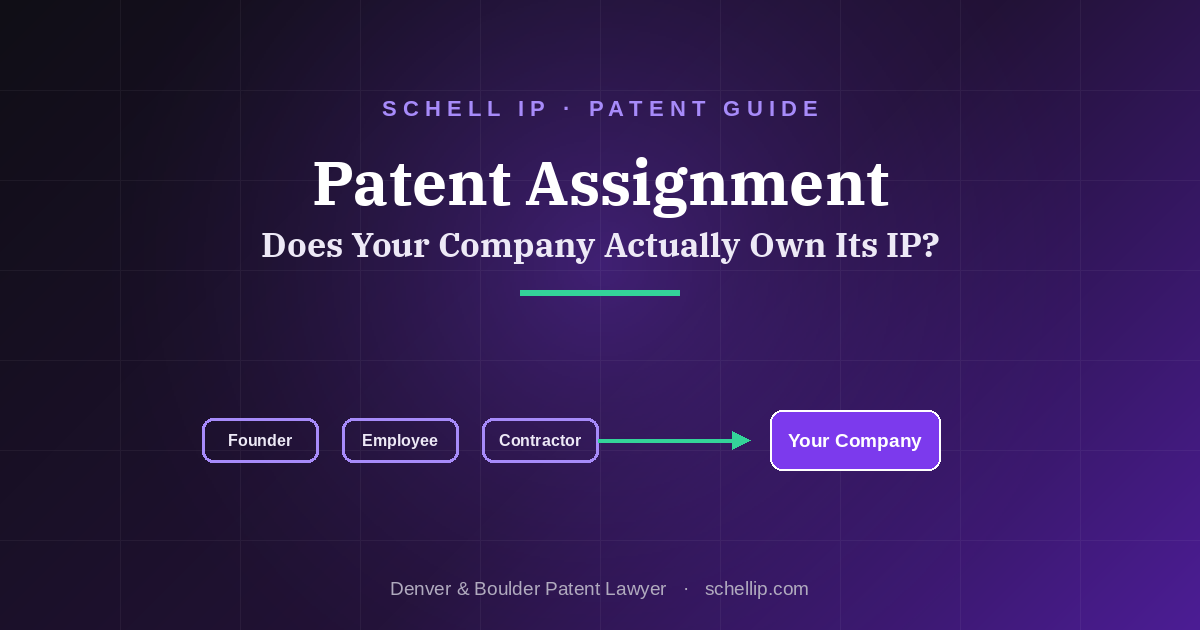
Quick Answer: A patent assignment is a written transfer of ownership of a patent or patent application from one party to another. Unlike a license, which only grants permission to use an invention, a patent assignment transfers the actual title. For startups, assignment matters most because it determines whether the company, rather than an individual founder, employee, or contractor, legally owns its inventions. A patent assignment should be recorded with the USPTO, and federal law gives you only three months from the assignment date to record it before a later buyer who records first can take priority. Missing or sloppy patent assignment is one of the most common IP problems uncovered during investor and acquisition due diligence.
Many founders assume that because an invention was created for their company, the company owns it. That assumption is wrong more often than you would think, and it can surface at the worst possible moment: during an investor’s due diligence or an acquirer’s review. The legal mechanism that actually moves ownership of an invention to your company is a patent assignment. Without a proper one, the rights may still belong to the individual who created the invention, not the business.
This guide explains what a patent assignment is, why it is critical for startups, how a patent assignment is executed and recorded with the USPTO, and the costly mistakes that a missing or defective patent assignment can create. Because ownership issues are difficult and expensive to fix after the fact, this is an area where getting it right early, ideally with a patent attorney, pays for itself many times over. If you are building toward a raise or exit, our IP strategy roadmap from idea to exit is a useful companion to this piece.
What Is a Patent Assignment?
A patent assignment is a legal document that transfers ownership of a patent, or a pending patent application, from one party (the assignor) to another (the assignee). The key word is ownership. A patent assignment moves the title itself, which is what makes it fundamentally different from a license.
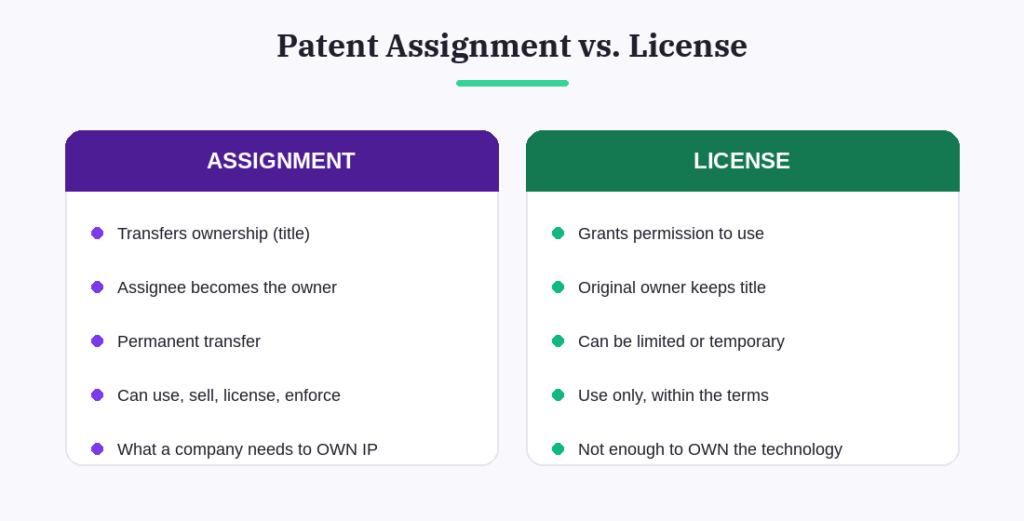
It helps to see the contrast directly. A license lets someone use an invention while the original owner keeps title. A patent assignment hands over the title entirely, so the assignee becomes the new owner with the full bundle of rights. Once a patent assignment is complete and recorded, the assignee, not the original inventor, holds the patent.
This distinction matters enormously for companies. When an engineer invents something, the law generally treats that engineer as the initial owner of the invention unless there is a written agreement or a patent assignment moving those rights to the company. A patent attorney can confirm whether your existing agreements actually accomplish that transfer, because many founders discover they do not.
Why Patent Assignment Is Critical for Startups
For startups, patent assignment is not a paperwork formality. It is the difference between a company that owns its core technology and one that merely hopes it does.
Here is the problem in practice. Founders, early employees, and especially independent contractors create the inventions that become a startup’s most valuable assets. But absent a proper patent assignment, the individual who created the invention may retain ownership. A contractor in particular is usually not an employee, so the default rules that sometimes favor employers may not apply at all. Without a signed patent assignment, that contractor could legally own a piece of your core product.
This becomes a crisis during due diligence. When investors evaluate a funding round, or an acquirer reviews a deal, they scrutinize the chain of title for the company’s patents. This is one reason every startup needs a patent strategy before fundraising, and clean ownership is the starting point of that strategy. A gap in patent assignment, an inventor who never signed over their rights, a contractor with a claim, an assignment that was never recorded, can stall a deal, reduce the valuation, or kill the transaction entirely. We have written before about why your exit depends on IP, not just revenue, and clean patent assignment is a foundational part of that.
The lesson is simple: every person who contributes to your inventions should sign a patent assignment to the company, and those assignments should be in place from the start. This is exactly the kind of foundational protection a patent attorney builds in early, and it is far cheaper than fixing a gap later. For more on early protection, see why early protection is crucial for startups.
Patent Assignment vs. License: Know the Difference
Because the two are so often confused, it is worth making the distinction explicit, since choosing the wrong one can leave your company without the ownership it needs.
A patent assignment transfers title permanently. The assignee owns the patent outright and can use it, license it, sell it, or enforce it. A license, by contrast, grants limited permission to use the invention while ownership stays with the original holder. If your goal is for the company to own the technology, a license is not enough; you need a patent assignment. A patent attorney can help you determine which instrument fits your situation, and our patent licensing guide explains how licensing works when that is the right tool.
How to Execute and Record a Patent Assignment
A valid patent assignment has two stages: executing the assignment document, and recording it with the USPTO. Both matter, and the second is where many companies fall short. Handling both correctly is part of what is included in a patent service when you work with a firm.
Step 1: Prepare and Sign the Assignment Document
A patent assignment must be in writing and signed by the assignor. It needs to clearly identify the patent or application being transferred, the parties involved, and the transfer of rights. Vague or incomplete language is a common source of later disputes, which is one reason having a patent attorney draft or review the patent assignment is worthwhile.
Step 2: Record the Patent Assignment With the USPTO
Recording is the step that protects your ownership against the outside world. A patent assignment is recorded through the USPTO’s online Assignment Center. Recording does two things: it creates a public record of the transfer, and it protects the assignee’s priority. Electronic recording is currently inexpensive, often free, though you should confirm the current fee on the USPTO fee schedule, since it can change.
Step 3: Record Within Three Months
This is the detail that catches people. Under federal law, an unrecorded patent assignment can be voided by a later good-faith purchaser who records first. You have only three months from the date of the patent assignment to record it and lock in your priority. Wait longer, and you risk losing your position to someone who recorded ahead of you. This three-month window is precisely the kind of deadline a patent attorney tracks so it does not slip.
Common Patent Assignment Mistakes That Cost Companies
A defective or missing patent assignment is one of the most common, and most preventable, IP problems. The mistakes that surface in due diligence tend to repeat:
- Never having contractors or consultants sign a patent assignment, leaving ownership of core inventions with an outside party
- Relying on an employment agreement that does not actually include a present assignment of inventions
- Executing a patent assignment but never recording it with the USPTO
- Recording the patent assignment late and losing priority to a party who recorded first
- Using vague assignment language that does not clearly transfer the specific rights
- Losing track of the chain of title across multiple entities, acquisitions, or name changes
Any one of these can turn into a deal-threatening problem at exactly the moment you can least afford it. The good news is that all of them are avoidable with a disciplined approach to patent assignment from the start, which is something a patent attorney can set up once and save you from revisiting under pressure later. If you are weighing whether professional help is worth it, our takes on whether you need a patent attorney and the benefits of hiring a patent attorney are useful reads.
Jeff’s Take
One of the issues I regularly run into in startup due diligence is a broken chain of title, and it often traces back to a missing patent assignment. A founder brings on a contractor to build part of the product in the early days, money is tight, paperwork is an afterthought, and nobody gets a signed assignment. Two years later that code or that invention is core to the company, and during a funding round the investor’s counsel asks a simple question: can you prove the company owns this? Suddenly everyone is trying to track down a contractor who moved on long ago to sign an assignment after the fact, often with leverage they did not have before.
What I tell founders is that patent assignment is cheap and easy at the start and expensive and stressful later. Get every contributor, employee, founder, and especially every contractor, to assign their inventions to the company in writing, and record the important ones promptly. It is not glamorous work, but it is the foundation everything else sits on. A company that cannot clearly prove it owns its own technology has a problem that no amount of revenue fully fixes, and the time to solve it is before anyone is looking, not during diligence. This is exactly the kind of thing a patent attorney handles early so it is never a fire drill.
How Schell IP Helps
At Schell IP, we help founders and companies make sure they actually own the IP their business depends on. Denver patent attorney Jeff Schell brings both legal expertise and real founder experience, including building and exiting his own ventures, so we understand patent assignment from the perspective of the investor and acquirer who will eventually scrutinize it.
We help inventors and startups by:
- Drafting clear patent assignment agreements that transfer ownership cleanly and hold up under due diligence
- Building assignment into your onboarding so every employee and contractor assigns their inventions from day one
- Reviewing your chain of title to find and fix gaps before investors or acquirers do
- Recording assignments properly and on time with the USPTO to protect your priority
Book a free consultation to make sure your company’s ownership of its IP is airtight.
Frequently Asked Questions
What is a patent assignment?
A patent assignment is a written legal document that transfers ownership of a patent or patent application from one party to another. Unlike a license, which only grants permission to use an invention, a patent assignment transfers the title itself.
What is the difference between a patent assignment and a license?
A patent assignment transfers ownership permanently, so the assignee becomes the new owner. A license only grants permission to use the invention while the original owner keeps title. If you want your company to own the technology, you need a patent assignment, not a license.
Why do startups need patent assignments?
Because the person who creates an invention is often its initial legal owner, a startup needs a patent assignment from every founder, employee, and contractor to ensure the company, not an individual, owns its core technology. Missing assignments are a frequent problem in investor and acquisition due diligence.
Do independent contractors need to sign a patent assignment?
Yes, and this is critical. Contractors are usually not employees, so default rules that sometimes favor employers may not apply. Without a signed patent assignment, a contractor could legally retain ownership of inventions they create for your company.
How do I record a patent assignment with the USPTO?
You record a patent assignment through the USPTO’s online assignment portal by submitting the signed assignment document and a cover sheet. Electronic recording is currently inexpensive or free, but you should confirm the current fee on the USPTO fee schedule.
Is there a deadline to record a patent assignment?
Yes. Under federal law, you have three months from the date of the patent assignment to record it. If you wait longer, a later good-faith buyer who records first can take priority over your unrecorded assignment.
What happens if a patent assignment is never recorded?
An unrecorded patent assignment is still valid between the parties, but it leaves you exposed. A later purchaser who buys the same rights and records first can void your unrecorded assignment, and the gap can create serious problems during due diligence.
Can a patent assignment be fixed after the fact?
Sometimes, but it is much harder and more expensive than doing it right the first time. Tracking down a former contractor or employee to sign an assignment years later, often during a deal, gives them leverage and can delay or derail the transaction. Early patent assignment avoids this entirely.
Final Thoughts
A patent assignment is the legal mechanism that turns “we built this” into “we own this.” For startups, that distinction is everything, because the company’s value rests on clearly owning the technology it was built on. The most common and damaging IP problems in due diligence trace back to missing, defective, or unrecorded patent assignment, and nearly all of them are avoidable with a disciplined approach from the start.
At Schell IP, we help founders and companies build airtight ownership of their IP, from drafting clean patent assignment agreements to reviewing chain of title and recording assignments on time. Whether you are forming a company, bringing on contractors, or preparing for a raise, the time to get your patent assignment right is now, before anyone is looking.
Book a free consultation today to make sure your company truly owns what it has built.