Quick Answer: A mechanical patent attorney helps inventors, manufacturers, and startups protect physical inventions: machines, tools, devices, and hardware systems. The goal is enforceable utility and design patents that hold up in licensing, fundraising, and litigation. Schell IP is a Denver-based patent law firm led by patent attorney Jeff Schell, who works with mechanical inventors and hardware startups across Colorado and nationwide.
What Does a Mechanical Patent Attorney Do?
A mechanical patent attorney does more than file paperwork. They translate how your invention physically works into legally enforceable patent claims that define exactly what competitors cannot copy.
That requires two things most attorneys do not have together: a technical background in engineering and deep experience navigating USPTO examination. Jeff Schell holds both.
Core responsibilities include:
- Drafting utility and design patent applications for mechanical inventions
- Conducting prior art searches to confirm novelty before filing
- Responding to USPTO Office Actions to keep applications on track
- Advising on patent strategy: what to file, when, and in what order
- Licensing and enforcement support once patents are granted
Why Mechanical Patents Require Specialized Expertise
Mechanical inventions are not abstract. They involve real components, tolerances, load paths, and manufacturing constraints. A patent application that fails to capture those technical details will either get rejected or, worse, get granted with claims so narrow they are easy to design around.
A strong mechanical patent application covers multiple layers of protection: broad independent claims for the core invention, narrower dependent claims for specific implementations, and design patent coverage for the product’s appearance when relevant.
This is why inventor background matters. An attorney who has only worked with software patents is not the right fit for a precision hardware product.
Mechanical Patent Attorney in Denver, Colorado
Schell IP is based in Denver and serves mechanical inventors and hardware companies throughout Colorado, including Boulder, Fort Collins, Colorado Springs, and the broader Front Range. Jeff Schell is a Denver patent lawyer with a background as both an entrepreneur and a licensed USPTO practitioner.
Colorado has a deep manufacturing and hardware ecosystem. Aerospace and defense contractors line the Front Range. Consumer hardware startups are concentrated in Denver and Boulder. These companies need patent protection that matches the sophistication of their inventions.
Schell IP works with:
- Hardware startups seeking IP protection before a seed or Series A raise
- Independent inventors with a physical product ready to file
- Manufacturers protecting new machine designs or process improvements
- Companies building hardware with embedded software components
Utility Patents vs. Design Patents for Mechanical Inventions
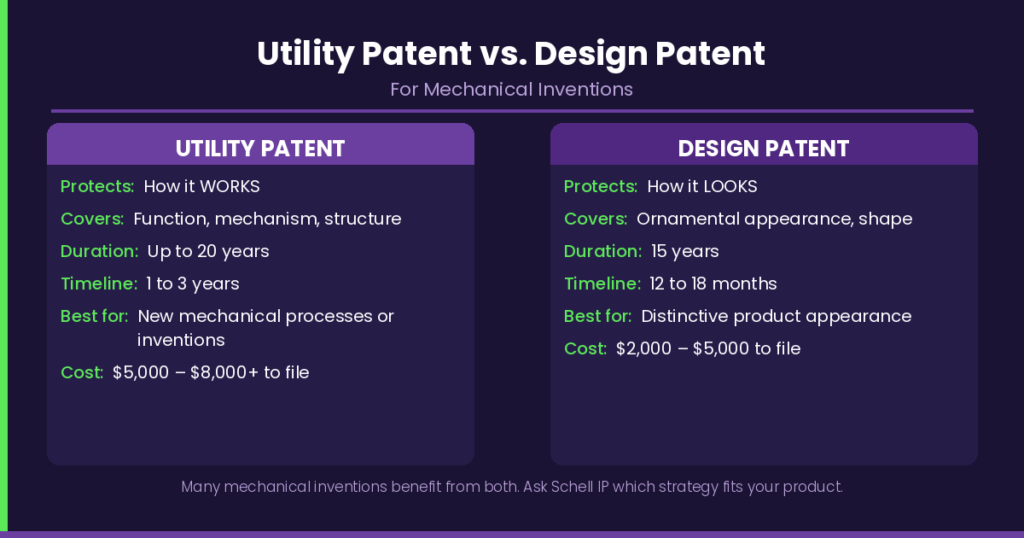
Most mechanical inventions need a utility patent, which protects how something works. A utility patent covers the structure, mechanism, and function of the invention. It does not cover appearance.
A design patent protects ornamental appearance. If your product’s distinctive shape or visual design is part of its commercial value, design patent protection can complement a utility filing. Many mechanical products warrant both.
Utility Patent Costs for Mechanical Inventions
A non-provisional utility patent application generally costs $5,000–$8,000+ to prepare and file. Total costs through issuance typically reach $10,000–$25,000+ depending on complexity and whether the USPTO issues Office Actions. These are general ranges and may vary. See the full patent cost guide for a detailed breakdown.
Provisional Patents for Mechanical Inventors
A provisional patent application gives you 12 months to develop your invention, refine the design, or raise capital before filing the full non-provisional. Provisional filings generally cost $3,000–$6,000 and establish your priority date immediately. These are general ranges and may vary.
The Patent Application Process for Mechanical Inventions
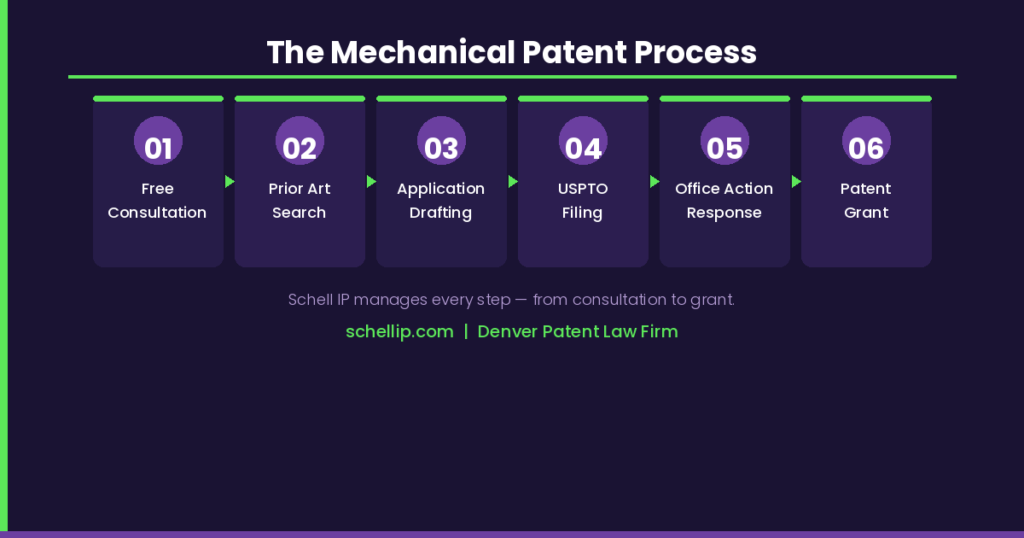
Here is what the process looks like at Schell IP:
- Free Consultation: We review your invention, assess patentability, and recommend a filing strategy.
- Prior Art Search: We search existing patents and publications to confirm your invention is novel and identify potential obstacles.
- Application Drafting: We write the technical description, claims, and drawings. For mechanical inventions, precise drawings and claim language are critical.
- USPTO Filing: We file the application and manage all correspondence with the patent examiner.
- Office Action Response: If the USPTO issues rejections or requests, we respond strategically to keep your application on track.
- Patent Grant: Once issued, your patent gives you the right to exclude others from making, using, or selling your invention for up to 20 years.
Common Mistakes Mechanical Inventors Make Without an Attorney
- Claims written too broadly. The USPTO rejects them for lack of novelty or obviousness.
- Claims written too narrowly. The patent gets granted but competitors can design around it easily.
- Missing technical detail in the specification. USPTO requires enough disclosure to enable someone skilled in the field to replicate the invention.
- Public disclosure before filing. Showing your invention at a trade show or announcing it before filing can forfeit international patent rights.
See the full breakdown of common mistakes inventors make without a patent lawyer.
Work With a Mechanical Patent Attorney in Denver
Schell IP works with mechanical inventors and hardware companies at every stage. From initial concept to a full patent portfolio, Jeff Schell brings the technical background and legal experience to get your invention protected the right way.
Book a free consultation to discuss your mechanical invention and get a clear picture of your patent options.

Frequently Asked Questions
What is a mechanical patent attorney?
A mechanical patent attorney is a USPTO-registered attorney with technical expertise in mechanical engineering who specializes in drafting and prosecuting patents for physical inventions: machines, tools, devices, and hardware systems.
Can I patent a mechanical invention if it also has software?
Yes. Many hardware products combine mechanical components with software or electronics. A patent attorney for software and a mechanical patent attorney often work on overlapping inventions. Schell IP handles both.
How long does it take to get a mechanical patent?
USPTO examination typically takes 1 to 3 years for a utility patent. A provisional patent application can be filed quickly to establish your priority date while the full application is being prepared.
How much does a mechanical patent cost?
A non-provisional utility patent application generally costs $5,000–$8,000+ to prepare and file. Total costs through issuance typically range from $10,000–$25,000+ depending on complexity and Office Actions. These are general ranges and may vary. The full patent cost guide has a complete breakdown.
Do I need a local patent attorney in Denver?
USPTO work is federal, so you do not legally need a local attorney. That said, working with a Denver-based mechanical patent attorney means closer collaboration, especially during the drafting phase when back-and-forth on technical details makes a real difference.
What is the difference between a utility and design patent for a mechanical invention?
A utility patent protects how the invention functions: its mechanisms, structure, and operation. A design patent protects the ornamental appearance of the product. Many mechanical inventions benefit from both.