Quick Answer: A medical device patent lawyer helps inventors, startups, and medical companies protect devices, diagnostics, surgical tools, and digital health products through enforceable patents. Medical devices face unique patent challenges because they often combine mechanical hardware, embedded software, and sensor technology, all while operating under FDA regulatory requirements. Schell IP is a Denver-based patent law firm led by patent attorney Jeff Schell, a successful medical device entrepreneur and patent lawyer who works with founders and companies on patent strategies for medical innovations.
Why Medical Device Patents Are Different
Medical devices do not fit neatly into one patent category. A single product might combine mechanical hardware, embedded software, sensor technology, data processing, and wireless communication. Each of these components may need its own patent claims or filing strategy.
On top of that, medical devices are regulated by the FDA. The regulatory pathway a device follows, whether 510(k), De Novo, or PMA, affects how patents should be written and timed. A medical device patent lawyer understands how patent strategy and regulatory strategy work together so filings are coordinated rather than handled in isolation.
This is what separates a medical patent attorney from a general patent practitioner. The technical depth and regulatory awareness required to draft strong medical device patents is specialized work.
What a Medical Device Patent Lawyer Protects
A medical device patent lawyer does not just file paperwork. The goal is to identify the technical innovations inside a product that give it market value and competitive defensibility, then build patent claims around those specifics.
Common patentable elements in medical devices include:
- Novel mechanisms, structures, or physical configurations in surgical instruments, implants, and diagnostic hardware
- Software-driven innovations such as algorithms for patient monitoring, diagnostic imaging, data analysis, and clinical decision support
- Sensor technology and signal processing methods
- Drug delivery systems and dosing mechanisms
- Wearable health devices with unique data collection or transmission methods
- Combination devices that integrate hardware, software, and biological components
Who Needs a Medical Device Patent Lawyer?
Medical device patents are not limited to large companies. Startups, solo inventors, university spin-outs, and research teams all benefit from working with a medical device patent attorney early in the development process.
A medical device patent lawyer may be the right fit if you are:
- Developing a new surgical tool, implant, or diagnostic device
- Building a digital health or remote patient monitoring platform
- Working on a wearable device with novel sensing or data capabilities
- Preparing for FDA submission and want IP protection aligned with your regulatory timeline
- Raising capital and need patents that support due diligence and valuation
Investors in the medical device space pay close attention to patent portfolios. A strong IP position signals that the company controls something proprietary, which can reduce investment risk and support higher valuations. This is true whether you are in Denver, Colorado, or anywhere else in the country.
When Should You File with a Medical Device Patent Lawyer?
Timing matters more in medical devices than in most other industries. The development cycle is long, and public disclosure can happen in ways founders do not expect.
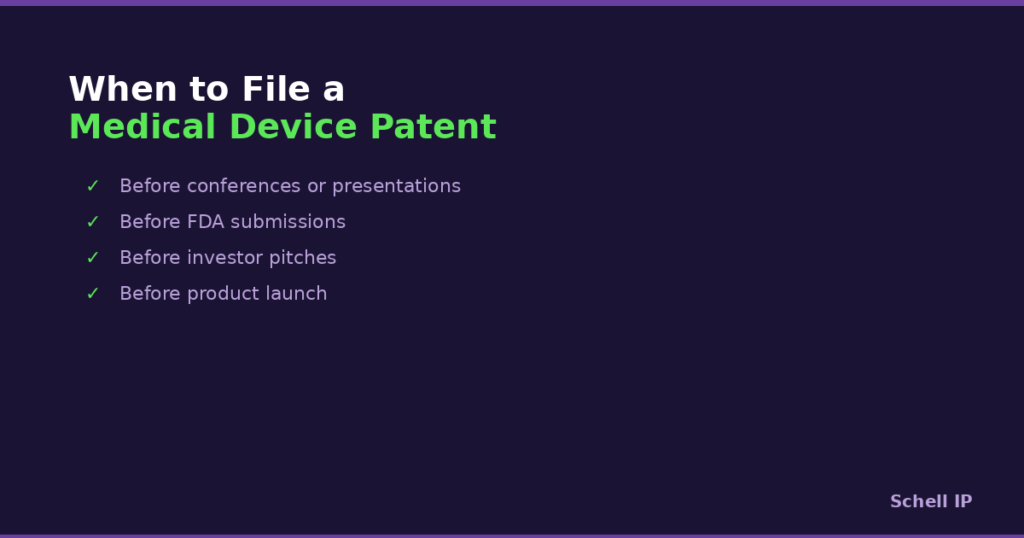
Under U.S. patent law, inventors generally have one year after a public disclosure to file. But in most international markets, any public disclosure before filing eliminates patent rights entirely. Conference presentations, published study results, FDA submissions that become public, and investor pitch decks can all count as disclosures.
A medical patent lawyer helps plan filings around development and regulatory milestones. That typically means filing a provisional patent application before presenting at conferences, publishing data, submitting to the FDA, or pitching to investors.
How Much Does a Medical Device Patent Cost?
Medical device patents vary in cost depending on the complexity of the device, the number of patentable features, and whether the product includes software components.
As general ranges that may vary based on the specific project, provisional patent applications typically cost $3,000 to $6,000. Non-provisional utility patent applications cost $4,000 to $8,000 or more. Design patent applications cost $2,000 to $5,000. Responding to USPTO Office Actions typically adds $2,000 to $5,000 per response. Total costs from initial filing through patent issuance generally fall between $10,000 and $25,000 or more depending on complexity.
For a detailed breakdown of patent costs by type, see the complete patent pricing guide.
Software and AI in Medical Device Patents
Many modern medical devices are software-driven. Diagnostic algorithms, remote monitoring platforms, AI-assisted imaging, and clinical decision support systems all involve patentable technology.
Software patents in medical devices face additional scrutiny under the Alice standard, which prohibits patenting abstract ideas implemented on a computer. A medical device patent attorney who also understands software patent law knows how to frame these inventions as technical solutions to technical problems, which is what the USPTO requires for approval.
Healthtech and biotech companies often need to patent AI and software innovations that go beyond surface-level functionality. The focus should be on the underlying systems, data flows, and architectures that make the technology work.
Patent Strategies for Medical Device Companies
A single patent rarely provides enough protection for a medical device. Most successful companies build a portfolio that covers different aspects of the product.
An effective medical device patent strategy typically includes:
- A utility patent covering how the device works, including its core mechanism, process, or system architecture
- A design patent protecting the device’s unique visual appearance, if applicable
- Separate filings for software or AI components that operate independently of the hardware
- International filings in markets where the company plans to manufacture, sell, or face competition
This layered approach creates multiple barriers for competitors. It also makes the company more attractive during fundraising and acquisition due diligence. For more on how patent strategy supports startup growth, see our article on Silicon Valley patent strategy.
International Patent Protection for Medical Devices
If you plan to sell or manufacture your device outside the United States, international patent protection is important to consider. Each country has its own patent system, and rights do not automatically extend across borders.
The Patent Cooperation Treaty (PCT) allows inventors to file one international application that can later be converted into national patents in over 150 countries. This provides up to 30 months to decide which markets to pursue, while preserving the filing date.
A medical device patent lawyer can help prioritize which countries matter most based on where a company manufactures, sells, and competes. Not every country needs protection, and strategic filing can significantly reduce international costs. For more on licensing strategies for international IP, see our guide on standard-essential patents and global IP.
What Happens If Someone Copies Your Medical Device?
Without a patent, there is no legal basis to stop competitors from copying a device. With a patent, the owner has the right to enforce their claims through cease-and-desist letters, licensing negotiations, or litigation.
A medical device patent attorney can help monitor the market for potential infringement, evaluate whether a competitor’s product falls within the patent claims, and take appropriate legal action if it does.
Strong patents drafted with enforcement in mind are far easier to defend than weak ones written only for approval. Working with an experienced medical patent lawyer from the start matters.
Frequently Asked Questions
What does a medical device patent lawyer do?
A medical device patent lawyer helps inventors and companies protect medical devices, diagnostics, surgical tools, wearables, and digital health products through enforceable patents. This includes patent searches, application drafting, USPTO prosecution, and enforcement.
How much does a medical device patent cost?
Costs vary by complexity. As general ranges, provisional patent applications typically cost $3,000 to $6,000. Non-provisional utility patent applications cost $4,000 to $8,000 or more. Total costs from filing through issuance typically range from $10,000 to $25,000 or more. These figures may vary based on the specific project.
Can software in a medical device be patented?
Yes. Software and AI components in medical devices are patentable when they solve a technical problem in a technical way. This includes diagnostic algorithms, remote monitoring systems, AI-assisted imaging, and clinical decision support tools.
When should I talk to a medical device patent lawyer?
As early as possible, ideally before any public disclosure, conference presentation, FDA submission, investor pitch, or product launch. Public disclosure before filing can permanently destroy patent rights in many countries.
Do I need a patent attorney who specializes in medical devices?
Medical devices combine mechanical, software, and regulatory complexity that general patent practitioners may not fully understand. A medical device patent lawyer with experience in FDA-regulated products and multi-component inventions is better positioned to draft strong, enforceable patents.
Protect Your Medical Device Innovation
A medical device patent lawyer does more than file applications. The right attorney protects the technology, the business value, and the competitive position behind a product.
Book a free consultation with Schell IP today to discuss your medical device and get expert patent guidance from Denver patent attorney Jeff Schell.