Quick Answer:
Patent infringement occurs when someone makes, uses, sells, or imports a patented invention without the patent holder’s permission. To enforce a patent, common steps include gathering evidence of infringement, sending a cease-and-desist letter, and pursuing legal action if needed. A patent infringement attorney can help you evaluate your options and protect your rights.
If you hold a patent, you have the legal right to stop others from copying your invention. But a patent only has value if you enforce it.
Patent infringement happens more often than most inventors expect. Competitors may copy a product, replicate a process, or use patented technology without realizing (or caring) that it is protected. When that happens, the patent holder must take action to protect their rights and their business.
This guide explains what patent infringement is, the different types of infringement, how to enforce a patent, and when to work with a patent litigation attorney.
What Is Patent Infringement?
Patent infringement is the unauthorized use of a patented invention. It happens when someone makes, uses, sells, offers to sell, or imports a product or process that falls within the scope of an active patent’s claims.
Patent claims define exactly what the patent protects. These claims are the legal boundaries of your invention. If another party’s product or process falls within those boundaries, it may constitute infringement.
Patents are granted by the United States Patent and Trademark Office (USPTO) and give the patent holder exclusive rights for a limited time, typically 20 years from the filing date for utility patents. During that time, only the patent holder (or those they license) can legally make, use, or sell the patented invention.
Types of Patent Infringement
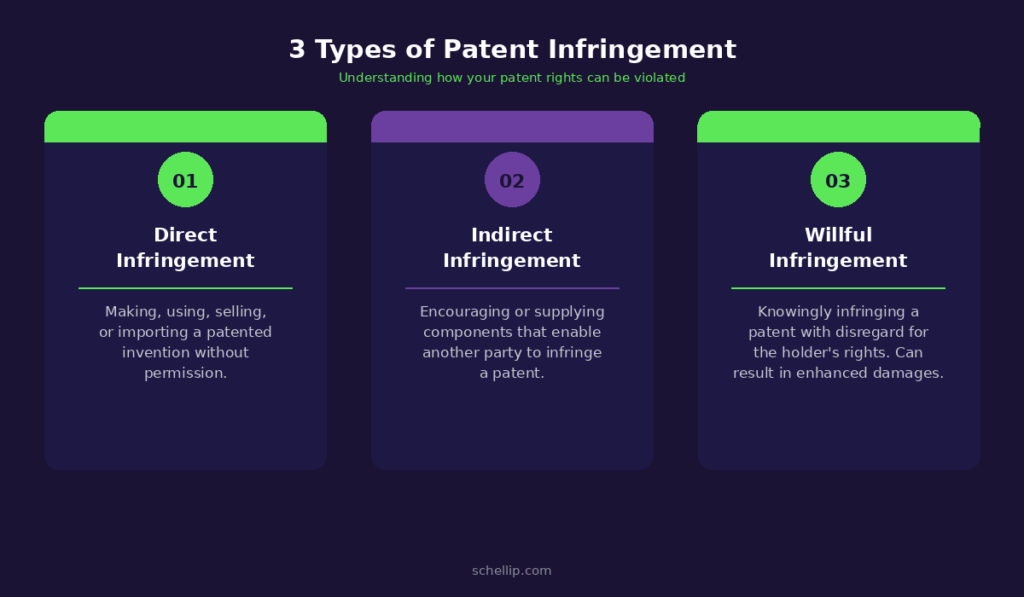
Not all patent infringement looks the same. Understanding the different types helps patent holders identify violations and build a stronger case.
Direct Infringement
Direct infringement is the most common type. It occurs when someone makes, uses, sells, or imports a patented invention without permission. The infringer does not need to know about the patent for direct infringement to occur.
Indirect Infringement
Indirect infringement involves actions that contribute to or encourage someone else to infringe a patent. There are two main subtypes:
- Induced infringement: Actively encouraging or instructing another party to infringe a patent.
- Contributory infringement: Supplying a component or material that has no substantial use other than in a patented invention.
Willful Infringement
Willful infringement occurs when someone knowingly violates a patent. Courts treat willful infringement more seriously, and it can result in enhanced damages, sometimes up to three times the standard award.
How to Protect Your Invention From Infringement
Patent enforcement starts before infringement ever happens. The stronger your patent, the easier it is to enforce.
Steps to protect your invention include:
- File a strong patent application. Work with a patent attorney to draft clear, enforceable claims that cover your invention’s key features.
- Conduct a thorough patent search. Before filing, confirm your invention is novel. A comprehensive patent search reduces the risk of rejection and strengthens your position if you ever need to enforce your patent.
- Monitor the market. Regularly review competitor products and industry developments. Early detection of potential infringement gives you more options for resolution.
- Use non-disclosure agreements. Before sharing your invention with investors, partners, or manufacturers, use NDAs to protect confidential information.
The Role of a Patent Infringement Attorney
A patent infringement attorney helps patent holders evaluate, pursue, and resolve infringement disputes. They bring legal expertise and strategic thinking to a process that can be technically complex and legally demanding.
A patent infringement attorney can:
- Analyze your patent claims and assess the strength of an infringement case
- Identify potential infringers and evaluate their products or processes
- Draft and send cease-and-desist letters
- Represent you in negotiations, mediation, or litigation
- Advise on patent strategy to prevent future infringement
Working with an experienced attorney early in the process can save time, reduce costs, and improve outcomes. At Schell IP, we help inventors and businesses protect their patents and enforce their rights.

Steps to Enforce a Patent
Enforcing a patent requires a clear, systematic approach. Rushing into litigation without preparation can weaken your case and increase costs.
Investigate and Gather Evidence
Before taking any legal action, confirm that infringement has occurred. This means comparing the accused product or process against your patent claims.
An effective investigation includes:
- Reviewing the accused product’s features, functions, and technical specifications
- Comparing those features against each element of your patent claims
- Documenting evidence of infringement, including purchases, marketing materials, and technical analysis
Technical experts may be needed to evaluate complex inventions. A patent attorney can help coordinate this analysis and determine whether you have a viable case.
Send a Cease-and-Desist Letter
A cease-and-desist letter is a formal notice to the infringing party. It identifies your patent, describes the infringement, and demands that the infringing activity stop.
A well-written cease-and-desist letter includes:
- Your patent number and a summary of the relevant claims
- A clear description of the infringing product or activity
- A demand to stop the infringing activity by a specific deadline
Many infringement disputes are resolved at this stage. The letter signals that you are aware of the infringement and prepared to take further action.
Consider Alternative Dispute Resolution
Not every infringement case requires a lawsuit. Mediation and arbitration offer faster, less expensive alternatives to litigation. These methods can work well when both parties are willing to negotiate.
File a Patent Infringement Lawsuit
If negotiation fails, filing a lawsuit may be necessary. Patent infringement lawsuits are filed in federal court.
Filing a lawsuit involves:
- Selecting the proper jurisdiction
- Preparing a detailed complaint that outlines the infringement
- Anticipating the defendant’s potential defenses
Patent litigation can be complex and resource-intensive. An experienced patent litigation attorney is essential for navigating the process and presenting a strong case.
The Patent Litigation Process
Patent litigation moves through several stages. Each stage has specific requirements and strategic considerations.
Discovery and Pre-Trial Motions
During discovery, both parties exchange evidence and information relevant to the case. This includes depositions, document requests, and expert reports.
Pre-trial motions address procedural and legal issues before the case goes to trial. These may include motions to dismiss or motions for summary judgment.
Markman Hearing and Claim Construction
A Markman hearing is a critical event in patent litigation. The court interprets the language of the patent claims, which often determines the outcome of the case. Both sides present arguments about what specific claim terms mean, and the judge issues a ruling that guides the rest of the trial.
Trial, Verdict, and Appeals
At trial, both sides present their evidence and arguments to a judge or jury. Key activities include expert testimony, cross-examination, and presentation of documentary evidence.
After trial, the court issues a verdict. If infringement is found, the court determines remedies. Either party may appeal the decision to a higher court.
Remedies for Patent Infringement
When a court finds that patent infringement has occurred, it may award several types of remedies:
- Injunctions: Court orders that stop the infringing party from continuing the infringing activity.
- Monetary damages: Compensation for financial losses caused by the infringement, including lost profits.
- Reasonable royalties: Payment based on what a reasonable licensing fee would have been.
- Enhanced damages: In cases of willful infringement, courts may award up to three times the standard damages.
Common Defenses Against Patent Infringement Claims
If you are accused of patent infringement, several defenses may be available:
- Invalidity: Arguing that the patent should not have been granted because the invention was not novel or was obvious.
- Non-infringement: Demonstrating that the accused product or process does not fall within the scope of the patent claims.
- Prior use: Showing that the accused party was already using the invention before the patent was filed.
Each defense requires careful legal and technical analysis. A patent attorney can help evaluate which defenses apply to your situation.
International Patent Infringement
A U.S. patent only protects your invention within the United States. If you sell products internationally or face competition from overseas manufacturers, you may need international patent protection.
Key considerations for international enforcement include:
- Filing separate patent applications in each country where protection is needed
- Understanding local patent laws and enforcement procedures
- Using the Patent Cooperation Treaty (PCT) to streamline international filings
International patent enforcement is more complex and expensive than domestic enforcement. Working with an attorney who has experience with global IP strategy is important.
Why Ongoing Patent Protection Matters
Securing a patent is only the first step. Protecting your invention requires ongoing attention.
Key ongoing actions include:
- Pay maintenance fees on time. Utility patents require maintenance fees at 3.5, 7.5, and 11.5 years. Missing a deadline can cause your patent to expire.
- Monitor competitors regularly. Watch for new products or services that may infringe your patent.
- Update your patent strategy. As your business grows and markets change, your intellectual property strategy should evolve with it.
Frequently Asked Questions
What is patent infringement?
Patent infringement is the unauthorized making, using, selling, or importing of a patented invention. It violates the exclusive rights granted to the patent holder by the USPTO.
What should I do if someone infringes my patent?
Start by gathering evidence of the infringement. Then consult a patent infringement attorney to evaluate your options, which may include sending a cease-and-desist letter, pursuing mediation, or filing a lawsuit.
How much does it cost to enforce a patent?
Patent enforcement costs vary widely depending on the complexity of the case. Sending a cease-and-desist letter is relatively inexpensive. Full patent litigation can cost significantly more. Learn more about patent costs.
What is the difference between direct and indirect patent infringement?
Direct infringement occurs when someone personally makes, uses, or sells a patented invention. Indirect infringement involves encouraging or contributing to another party’s infringement.
Can I enforce a patent without a lawyer?
Technically yes, but patent enforcement involves complex legal procedures and technical analysis. Working with an experienced patent infringement attorney significantly improves your chances of a successful outcome.
How long does patent litigation take?
Patent litigation timelines vary, but most cases take one to three years from filing to resolution. Some cases settle earlier through negotiation or mediation.
Protect Your Invention from Patent Infringement With an Experienced Patent Attorney
Patent infringement can threaten your business, your revenue, and the value of your innovation. Acting early and working with the right attorney makes a real difference.
Book a free consultation with Schell IP today to discuss your patent enforcement options and protect your invention.