
Quick Answer: Startups need a patent strategy before fundraising because investors want to know your core innovations are protected. Patents increase company valuation, reduce investor risk, and prevent competitors from copying your product. Filing a provisional patent application before your first funding round is one of the most effective steps a startup can take before approaching investors.
Innovation is the foundation of most startups. Protecting that innovation is just as important as building it.
A patent strategy helps startups secure their ideas before competitors can copy them. It also plays a direct role in fundraising. Investors look for companies that have taken steps to protect their intellectual property.
Without a patent strategy, a startup’s innovations are exposed. Competitors can copy products, undercut pricing, and erode market share. This makes IP protection one of the most important steps a startup can take before seeking investment.
What Is a Startup Patent Strategy?
A patent strategy is a plan for identifying, filing, and managing intellectual property protections. For startups, this includes deciding which innovations to patent, when to file, and how to align patent activity with business and fundraising goals.
A complete IP strategy for startups typically includes:
Patents protect inventions and technical processes. Trademarks protect brand names and logos. Copyrights protect software code and creative works. Trade secrets protect confidential business information such as formulas or methods.
Each type of protection serves a different purpose. Together, they create a more complete defense around a startup’s innovations.
Why Investors Care About Patent Strategy
Investors evaluate risk before making decisions. A startup with protected intellectual property represents less risk than one without.
Patents show investors that your innovations are legally secured. They signal that a competitor cannot simply copy your product and enter the same market. This makes your startup more attractive as an investment.
Patents can also increase company valuation. Intellectual property is a business asset. Startups with strong patent portfolios are often valued higher than those without. This matters during funding rounds and especially during acquisition discussions.
Licensing is another reason investors pay attention to patents. A patent can generate revenue through licensing agreements, which creates an additional return path beyond product sales or an exit.
When to File: Timing Your Patent Strategy Around Fundraising
Timing is one of the most important parts of a patent strategy. Filing too late can result in losing patent rights entirely.
The general rule is to file before any public disclosure of your technology. Public disclosure includes product demos, pitch competitions, press coverage, and in some cases investor conversations. Once an invention is publicly disclosed, a filing deadline begins.
A provisional patent application is often the right first step. It establishes a priority date and gives the startup 12 months to file a full non-provisional application. This allows time to develop the product, raise capital, and refine the invention without losing legal standing.
Startups preparing for a Series A or later round should have patent filings already in progress. Investors at this stage often conduct IP due diligence, which includes reviewing the strength and scope of existing patent applications.
Book a free consultation with Schell IP to review your filing timeline before your next funding round.
Common Patent Strategy Mistakes Startups Make
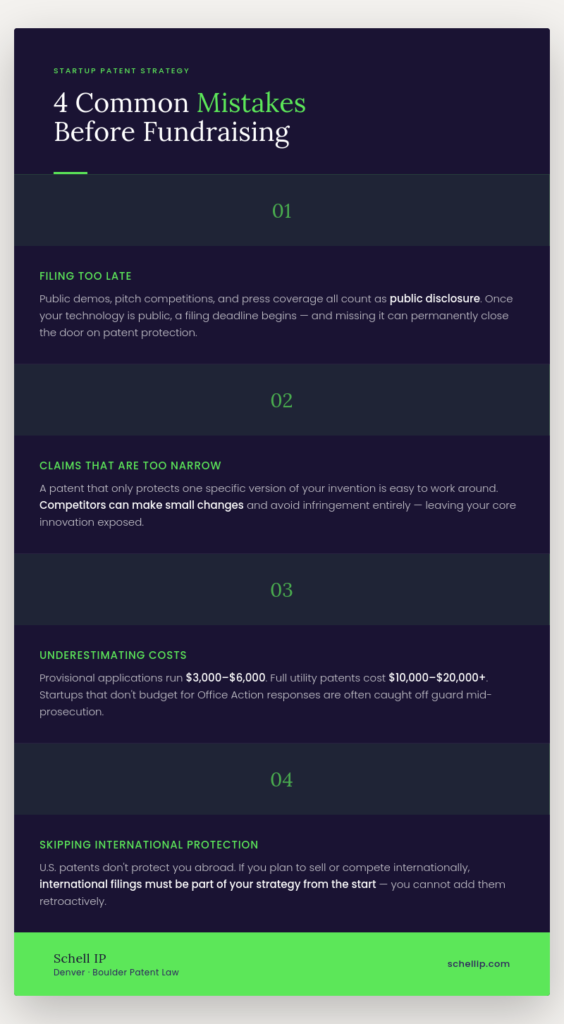
Many startups delay filing patents. They wait until the product is finished or the company has revenue. By then, public disclosure may have already occurred and the window to file may have closed.
Another common mistake is filing patents that are too narrow. A narrow patent only protects one specific version of an invention. Competitors can make small changes and avoid infringement. A startup patent attorney can help draft claims that are broad enough to provide real protection.
Underestimating cost is also a frequent issue. Understanding how much a patent costs helps startups plan ahead. A provisional patent application typically costs $3,000 to $6,000. A full utility patent typically costs $10,000 to $20,000 or more over the life of its prosecution depending on complexity. Budgeting for USPTO Office Action responses is also recommended.
Startups with global ambitions sometimes focus only on U.S. protection. If you plan to sell or compete internationally, international patent filings should be part of the strategy from the beginning.
How a Patent Strategy Creates Competitive Advantage
A strong patent portfolio protects more than just an invention. It creates a barrier that makes it harder for competitors to enter the same market.
Competitors who want to build a similar product must either design around existing patents or license the technology. This takes time and resources, which gives the patent holder a meaningful advantage.
Patents also support business development. Enterprise buyers and strategic partners often view patents as a sign of technical credibility. A startup with granted patents may have an easier time closing partnerships and sales cycles.
In acquisition scenarios, a strong patent portfolio can increase purchase price. Acquirers often pay more for companies with protected technology than for those without.
Working With a Patent Attorney on Your Patent Strategy
Working with an experienced patent attorney is an important part of building an effective strategy. A good attorney helps identify which innovations are patentable, drafts claims that hold up under review, and aligns filings with fundraising timelines.
Look for an attorney with experience working with technology startups. Understanding the technical side of software, AI, or hardware is essential for writing patents that accurately reflect the invention and survive USPTO examination.
At Schell IP, Denver patent attorney Jeff Schell works with founders to build patent strategies that support funding rounds, protect market position, and prepare for due diligence. Schell IP offers fixed and capped fee structures so startups can plan patent budgets without surprises.
Frequently Asked Questions
Why does a startup need a patent strategy before fundraising?
Investors look at intellectual property as part of their risk evaluation. A startup with patents in progress is more defensible and typically valued higher. Filing before fundraising shows investors that core innovations are protected.
When is the right time to file a patent as a startup?
File before any public disclosure of your technology. A provisional patent application establishes your priority date and provides 12 months of patent-pending status while you raise capital and continue developing your product.
What does a startup patent strategy include?
A complete strategy includes patents for core technical innovations, trademark protection for your brand, trade secret protocols for confidential information, and non-disclosure agreements before sharing sensitive details with investors or partners.
How much does a patent strategy cost for a startup?
A provisional patent application typically costs $3,000 to $6,000. A full utility patent costs $10,000 to $20,000 or more depending on complexity. Schell IP offers fixed and capped fee structures to help startups plan costs in advance.
Can a startup patent software or AI products?
Yes. Software and AI inventions can be patented when they solve a technical problem in a technical way. Courts and the USPTO have strengthened protections for real technical implementations in software and AI, making this a good time to file.
Do I need a patent attorney or can I file on my own?
Most self-filed patents are rejected or produce weak protection due to poor claim drafting. A startup patent attorney ensures patents are written to survive examination, hold up in due diligence, and provide real protection against competitors.
Ready to build a patent strategy before your next funding round? Book a free consultation with Schell IP today.